
Stretching Long: Fighting Apartment Fires
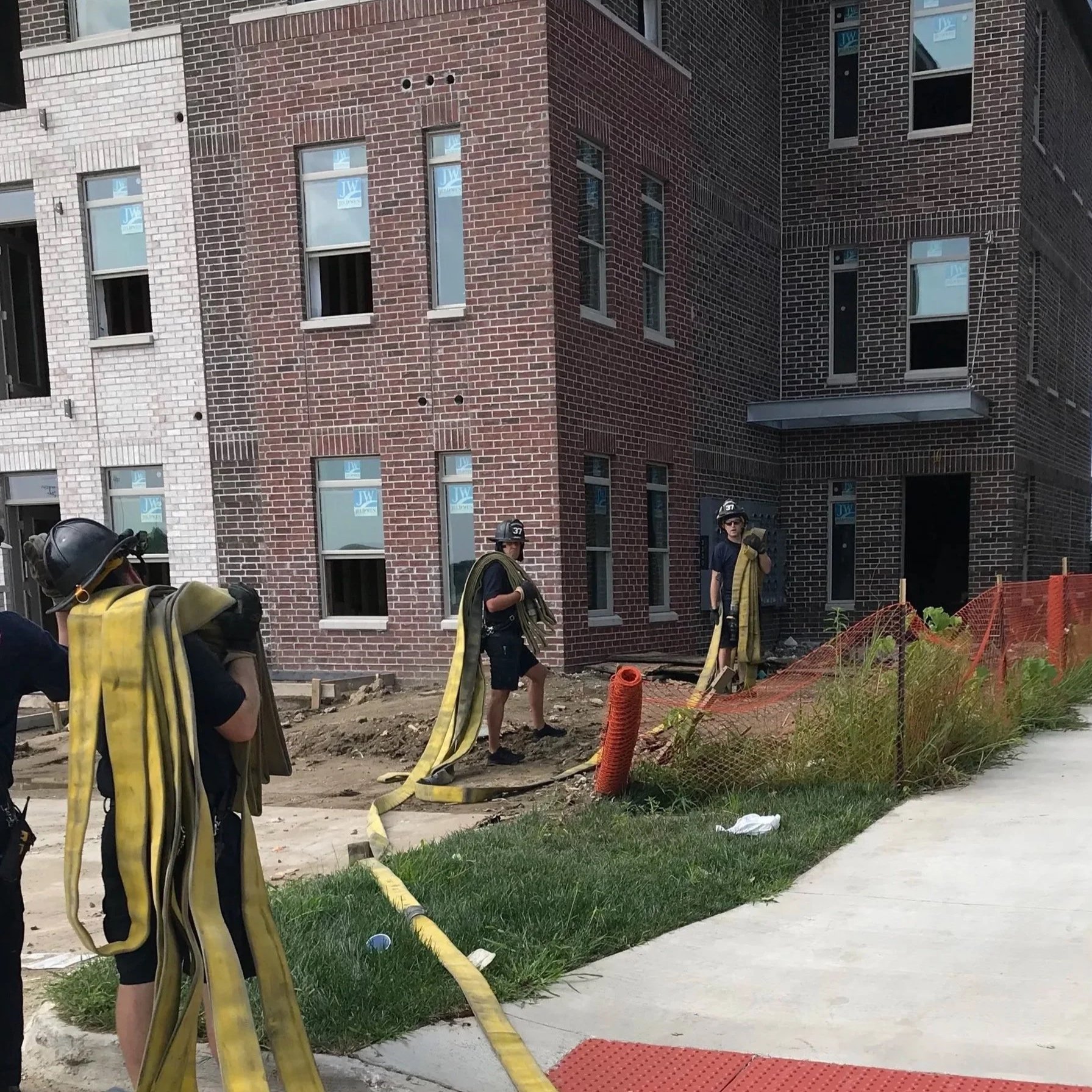
Suburban cities have seen a rapid growth throughout the country in housing and amenities. Couple this with the new generations desire to be mobile in their lifestyle; and the housing market values skyrocketing, we have seen an explosion of apartment building development to provide alternative housing needs. My area has not been exempt from this phenomenon. In our district, we have over 300 individual apartment buildings throughout our response area. These apartment buildings range from single story apartments to four story buildings with standpipes with the majority of those buildings being three story, so builders can avoid standpipe installation cost.
In addition, even though the majority of these buildings are sprinklered, it seems that fires in these large buildings occur at a frequent rate. The metroplex that I work, we are usually good for several each year and the risk associated with these fires are significant due to the occupancy load within these buildings. If you want to check out more on apartment building types and tactics to combat each, check out the Rogue Apartment Manual.
NFPA 14 is the standard for Installation of Standpipe and Hose Systems requires any building that is 4 story or greater or 30 feet above (or below) the fire department access. When exceeding 3 stories, firefighter tactics become more clear. The presence of standpipes simplifies fire suppression efforts by the use of the standpipe for water supply to the fire floor. The simplicity of standpipes is anything but easy or simple, but it clarifies the engine company’s primary obstacle of high rise firefighter; deployment of the fire attack line. But what do we do in these larger, three-story apartments?
In my class, I usually ask the attendees, “What’s Your Plan” and show them a three-story apartment with fire on the third and in the attic. I ask this, because that was the question I asked myself and had no answer. So with that, I set out to establish a tactic to combat fires in these un-standpiped apartment buildings.
Through stretching, pre-planning and tactical discussions, we developed a tactic that can be used to combat each level of involvement of fire from a small room and content to a larger multi-room apartment unit or an entire roof/ floor. Remember, we must meet and exceed the intesity of fire with our fire suppression efforts. If not, we are in a losing battle. This means getting large amounts of water to the fuel-flame interface to stop and suppress the fire.
There are three different scenarios which we can categorize to start our attack decision-making. First is an externally-ignited fire. If the fire started on the outside, we MUST extinguish the fire on the outside, because this is the origin of the fire. Second is an internally-ignited fire. Third is attached garage involvment and finally is multiple floors of involvement.
Externally-Ignited Fires
I would be remised if I didn’t mention Chris Langlois and his class,” The Power of One”, when we discuss externally-ignited apartment fires. From discussion and attending his class and even having him conduct training for our organization, we have adopted those tactics for these situations; even having play calls named Omaha and Omaha Heavy. The goal at externally-ignited fires, is to extinguish the exterior fire to stop the fire at the origin and stop the vertical spread to the higher floors and roof. This can be done in a few different tactics. OMAHA is a play call for use in which we utilize a 1.75” or 2.5” hose to suppress the external fire, then stretch a 1.75” or 2.5” hose to the fire floor, if it penetrated the building’s exterior or top floor to combat the spread to the attic.
OMAHA HEAVY is the play call for the use of the deck gun/ master stream device to suppress the external fire before stretching the 1.75” or 2.5” to the fire floor or top floor to combat the interior fire.
Internally-Ignited Fires
When the fire starts on the interior, there is no need for outside water, so the crew then can initiate fire attack from the interior. For this, we have some different options with the use of 1.75” or 2.5” hose depending on the size of fire. I would always caution for the 2.5” not just for the the larger stream but for the flexibility. We can also deploy a Leader Line, which is my choice when combating fire on top floor, especially in center-hall apartment buildings.
Leader Line
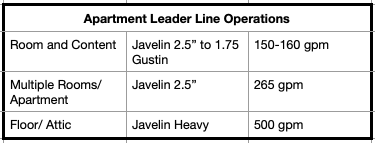
My preference of a Leader Line, as mentioned earlier, is the flexibility of the line to combat different stages of fire. I have named these Javelin or Javelin Heavy. By stretching a leader Line, which is a 2.5” hose to the fire floor, we have many different options once we get that line in place. We can utilize it as a 2.5” for larger fires such as an entire apartment or multiple. This will provide us with 265 gpm from a SB nozzle with reduced nozzle reaction. If the fire is a room and content, we can attach our hose pack, Gustin Pack for us. This allows either 150 rpm or 160 rpm from a fog or SB. When we have a larger conflagration, we are going to need more penetration and more GPMs. We can also accomplish this with a portable master stream device placed on the fire floor or top floor to combat fire in the attic. I call this JAVELIN HEAVY. By brining the portable master stream device to the top floor, this allows us to apply a large caliber stream with minimal effort in a package that is still maneuverable by the crew inside. This package can deliver up to 500 gpm from below the fire. So with this setup, you can see that we can match the intestate of the fire with our options from he Leader Line Operations.
Now that we have a plan, how do we accomplish it. First is to ensure you have the necessary hose load. We run a static load of 400’ of 2.5” Tru ID hose. This allows reduced water weight, while still being able to flow 265-500 gpm for 2.5” or portable master stream flows. We stack the hose in 4-100’ stacks with loops at every 100’ to easily identify each 100’ for quick deployment. For other departments with longer stretches, we have actually assisted with 500’ static hose load with 100’ bundled as well. The length needs to depending on our jurditicational needs. In addition, we also have a reconnected 200’ of 2.5” that we use primarily as a blitz line, but it can also be used as a leader Line if the length is correct. We will discuss length next.
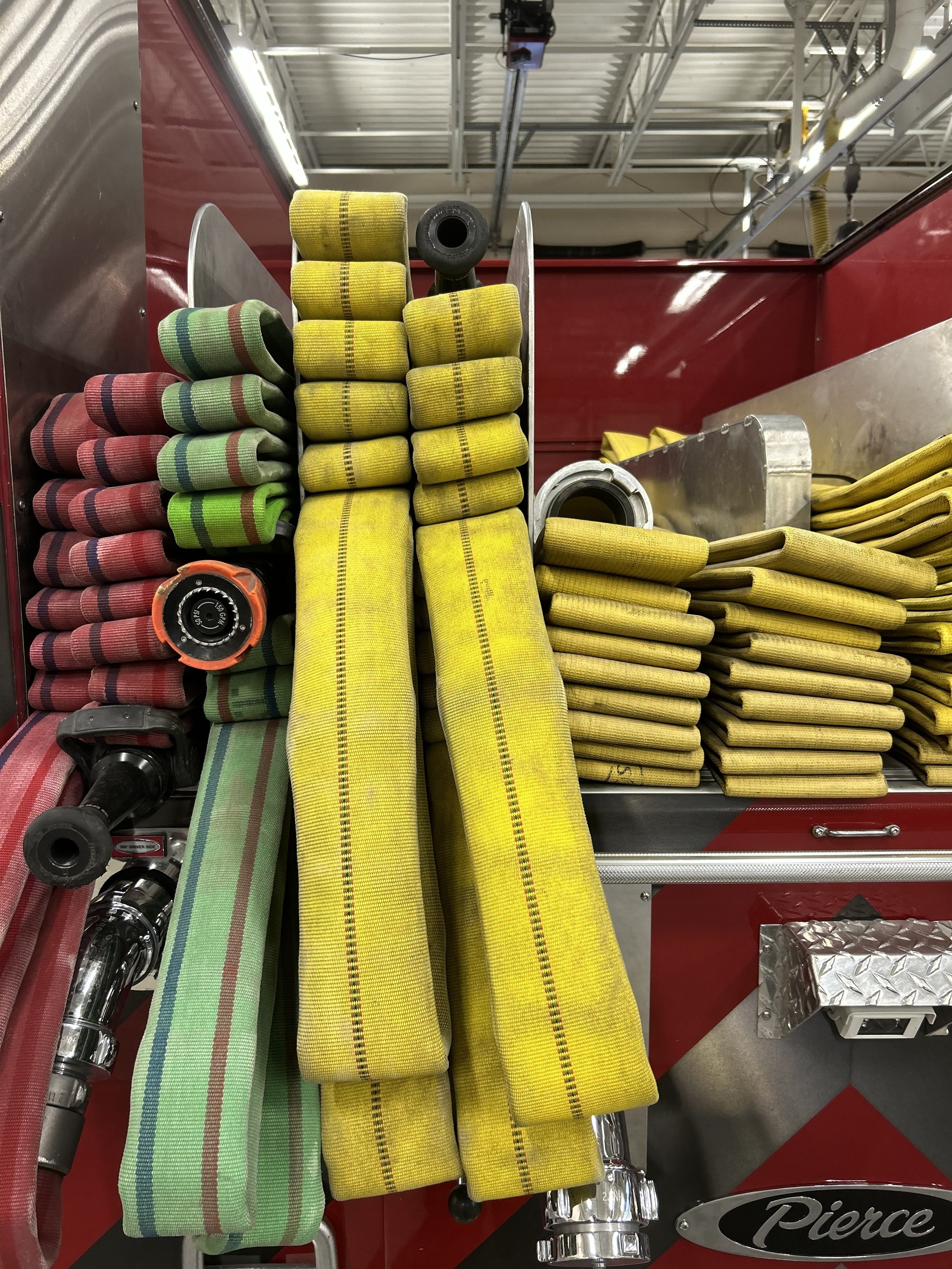
Next is having a Hose Pack. Again, we use and recommend the Gustin Pack (video is here), but any hose pack if 1.75” will work.
Estimating the Stretch
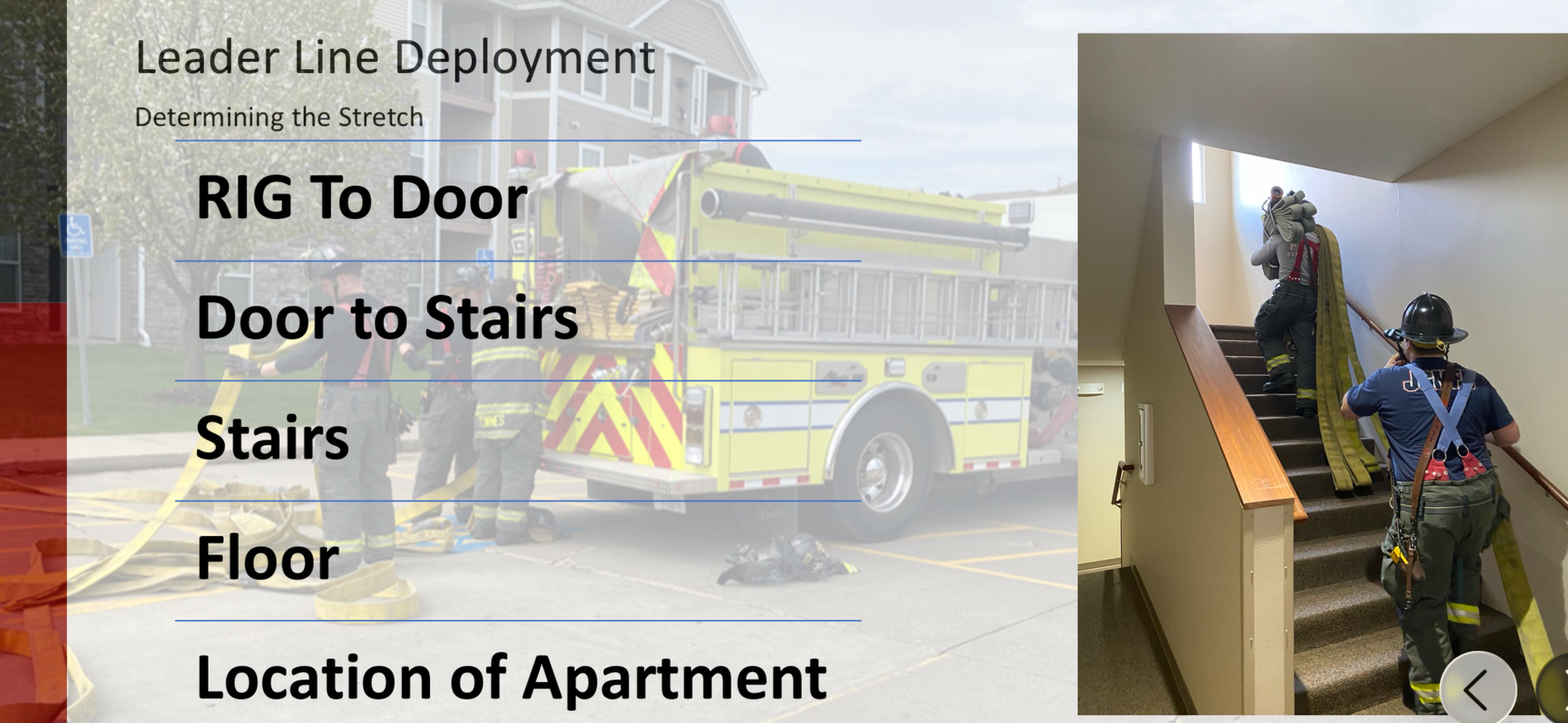
When it comes to apartment stretches, there are five factors that will determine the stretch. Those five factors include: Rig to Door, Door to Stairs, Stairs, Number of Floors, and Location of the Apartment from the stairs. These factors account for the total length that needs to be taken into account. The first factor, Rig to Door, refers to the position of the apparatus to gaining entry into the building. This can be a quick 25-50 feet to the front door, or alternative access through garage doors, side ore rear doors, or other access points. Second, Door to Stairs, accounts the distance from the entry point to the beginning of the stairs. Again, this can be varied depend on stair location, number of stairs, and access points. Third, Stairs, is probably the easiest for most apartments. There are only a number of different stairs types and most can be ascended with 50’ or less. Straight run and return stairs are the most common can be given an easy 50’ per stairs. This standard 50’ will be enough for the stairs except if you have any wrap around stairs, which the stairs circle the elevators. These can quickly eat up hose. If you have these type of stairs in your district, I would highly recommend pre-planning with a stretch bag or stretch on them to ensure you will estimate enough hose. Again, these numbers are true for my district, but it is imperative that you pre-plan your own buildings as construction can differ across the country. Next, which we already mentioned, is Number of Floors. We estimate 50’ per floor, so then add how many floors you have to ascend. Finally, Location of Apartment from the Stairs. Once we exit the stairs, then we need to estimate the location of our drop point or apartment door. Several factors will determine how this goes including if conducting fire attack with 1.75” utilizing a Gustin or attacking with a 2.5”. If you are attacking with a 1.75” for a room and content, then having 50’ extra will cover the apartment. If you are going to make an attack with a 2.5”, you will need extra to advance.
Once you have estimated the stretch, you need to determine where you will begin your attack from and manage your deployment from there. This can be determined based on the conditions in the hallway; dirty vs clean hallway. Obviously, just like we have all been told, but I will reiterate, utilizing the floors below to determine the apartment location prior to making the fire floor will aid in the deployment and estiamting the stretch.
Alternative Stretches
There are clearly other means of stretching such as soft standpipe with a rope drop or coupling drop. We can also do a Well Stretch if you have an open stair well. You can also stretch longer 1.75'“ lines as well. Stretching the 1.75” is dependent on the location of the fire and size of the fire. Doing this commits you to the 1.75” in a commercial setting, which can potential overwhelm a 1.75” line. Again, the benefit of the Leader Line is the flexibility of volume to match the intensity of fire. There is also a soft standpipe on the outside of the building. These can be explored in other blogs in the future.
Role and Responsibilities & The Stretch
As you may have figured out, this is not a simple task and one that must be trained. This requires a very coordinated deployment by utilizing your entire crew. If done poorly, you will create several issues and even more headache. The goal of the stretch is controlled and coordinated. The old adage, Slow is smooth, smooth is fast might be fitting here. It should be noted that anytime we have the personnel, we should try to shoulder as much hose as possible. This will reduce obstacles an reduce the hose getting snagged on corners. The limiting factor will be the number of personnel you have available for the stretch.
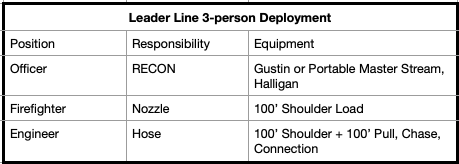
4-Person Engine or Ambulance marrying to the Engine increases the speed and quality of the deployment. When conducting trials, adding a second a third person to the deployment can reduce several seconds, up to minutes off the stretch. A well coordinated and trained team can get to the 3rd floor in less than 3 minutes.
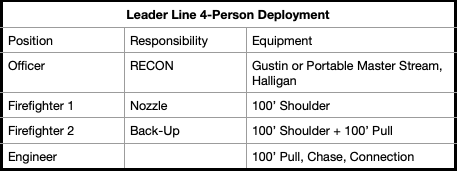
Apartments can be a tough fire to combat because of the complexities of the building, long stretches, and the vacant space coupled with the heavy occupancy load. These are situations that you must have a game plan and have been practiced. If not, chaos will soon ensue and lost time will accumulate. We have went further by simplifying communication with the creation of plays and a playbook. This will enhance communication during high stress environments.